
Running a business comes with tough decisions — especially when it comes to staffing.
Should you hire an in-house employee or a virtual assistant (VA)? Many founders ask this question as they scale. On one hand, in-house employees provide hands-on support. On the other, virtual assistants offer flexibility and lower overhead.
In this blog, we’ll break down all the costs, benefits, and hidden factors so you can make an informed choice that saves money and increases productivity.
By the end, you’ll know which option is smarter for your business: in-house vs virtual assistant.
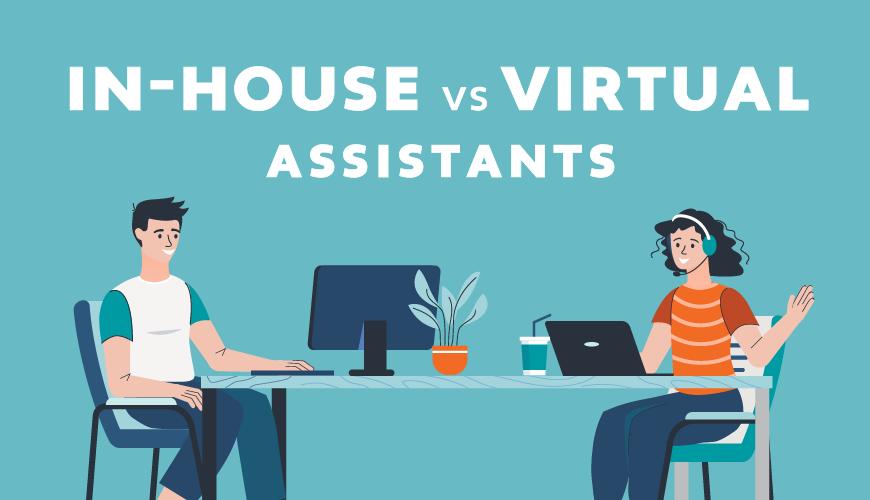
1. Understanding the Difference: In-House Employee vs Virtual Assistant
Before comparing costs, let’s clarify the differences.
1.1 In-House Employee
An in-house employee works on-site (or remotely) as a full-time or part-time member of your team.
Pros:
• Direct supervision
• Constant availability
• Integrated into company culture
Cons:
• High overhead (salary + benefits + equipment)
• Limited flexibility
• Hiring and training take time
1.2 Virtual Assistant (VA)
A VA is a remote professional who handles specific tasks for your business, often on a flexible schedule.
Pros:
• Lower costs (pay only for hours worked)
• Scalable support
• Access to specialized skills
Cons:
• Not physically present
• May require clear systems and processes for communication
• Limited integration into company culture
2. The Cost Breakdown: In-House Employee vs Virtual Assistant
The first step in deciding is comparing all direct and indirect costs.
2.1 In-House Employee Costs
Salary
• Average salary depends on location and role.
• Example: Administrative Assistant in Manila = ₱40,000–₱50,000/month
Benefits
• Health insurance, vacation, sick leave, bonuses, retirement contributions
• Estimated cost = 10–20% of salary
Equipment & Software
• Laptop, monitor, headset, office furniture, software licenses
• One-time setup: ₱20,000–₱30,000
• Ongoing software subscriptions: ₱2,000–₱5,000/month
Training & Onboarding
• Lost productivity during onboarding
• Trainer salary + time investment
• Example: 2–4 weeks of low productivity
Taxes & Compliance
• Government-mandated contributions (SSS, PhilHealth, Pag-IBIG, taxes)
• Example: ~10–15% of salary
• Estimated monthly total for an in-house admin assistant: ₱25,000–₱40,000+
2.2 Virtual Assistant Costs
Hourly or Fixed Rate
• Philippines-based VA: ₱250–₱500/hour
• Full-time remote VA (160 hrs/month): ₱40,000–₱80,000
No Benefits or Taxes
• You pay only for actual work hours
• No health insurance, no retirement contributions, no overtime
Equipment & Software
• VA usually provides their own laptop and internet
• Business provides access to software only (e.g., Zoom, ClickUp, Google Workspace)
Training
• Shorter onboarding due to specialized skills
• Often faster ROI as they’re used to remote work systems
• Estimated monthly total for a full-time VA: ₱40,000–₱80,000 (flexible)
3. Hidden Costs That Many Founders Forget
Cost isn’t only about salary. Hidden costs can significantly impact your bottom line.
3.1 In-House Employee Hidden Costs
• Sick days and absences
• Time spent managing employees
• Office space, electricity, internet
• Employee turnover (replacement costs, recruiting, training)
3.2 Virtual Assistant Hidden Costs
• Communication tools (Slack, Trello, Zoom)
• Time to create SOPs and processes
• Possible time zone differences
• Even with hidden costs, VAs are often cheaper for startups because most overhead comes from in-house employees.
4. Productivity & Efficiency Comparison
Cost savings aren’t just money — it’s also about output per hour.
4.1 In-House Employees
• Can collaborate directly
• Good for creative tasks requiring team integration
• Productivity may drop if not properly managed
4.2 Virtual Assistants
• Task-focused, often highly skilled in specific areas
• Flexible hours to match your workload
• Can scale up quickly for special projects
Bottom line:
If your work involves repetitive tasks, admin work, or support functions, VAs provide higher ROI.
5.Common Scenarios: Who Saves More Money?
5.1 Scenario 1: Startup with Limited Budget
• Needs admin support, social media scheduling, email management
• VA wins: lower overhead, flexible hours, scalable
5.2 Scenario 2: Medium Business Scaling Up
• Needs integrated marketing, client support, bookkeeping
• VA may still be cheaper, especially if hiring multiple specialists instead of full-time staff
5.3 Scenario 3: Business Requiring On-Site Presence
Physical retail, operations, or in-person client interactions
In-house employee required: VAs can’t replace physical tasks
6. ROI Example: In-House vs Virtual Assistant
| Item | In-House Employee | Virtual Assistant |
|---|---|---|
| Salary | ₱40,000/month | ₱40,000/month |
| Benefits | ₱5,000/month | ₱0 |
| Equipment | ₱2,000/month | ₱500/month |
| Taxes | ₱3,000/month | ₱0 |
| Productivity Factor | 80% | 95% |
| Total Cost | ₱50,000/month | ₱40,500/month |
Savings = ₱10,500/month (~21% cost reduction)
Add scalability: hiring 2–3 VAs for specialized tasks is still cheaper than 2 in-house employees with the same skills.
7. Additional Factors to Consider
7.1 Flexibility
• VAs can adjust hours based on workload
• In-house employees require consistent hours
7.2 Hiring Speed
• VA can start in days
• In-house takes weeks or months
7.3 Risk Mitigation
• With a VA, no long-term financial commitment
• You can scale down during slow months
8. Tasks Best Suited for VAs
| Task Type | Examples |
|---|---|
| Admin & Operations | Email management, calendar scheduling, data entry |
| Customer Support | Chat support, ticket management |
| Marketing | Social media posting, content creation, email campaigns |
| Sales Support | Lead research, CRM updates, follow-ups |
| eCommerce | Order processing, inventory management |
Tip: If the task is repetitive or rules-based, a VA is usually cheaper and faster.
9. How to Decide: Step-by-Step Guide
1.List all tasks you currently do or plan to do
2.Estimate hours per task per month
3.Compare in-house vs VA cost for those hours
4.Consider hidden costs and productivity factor
5.Factor in flexibility and scalability needs
6.Make a decision based on total ROI, not just salary
10. Mistakes to Avoid When Hiring a VA
• Treating a VA like a full-time employee without clear expectations
• Not providing SOPs or processes
• Overloading a VA with too many different tasks at once
• Not tracking results or KPIs
• Proper onboarding and management ensure you maximize cost savings.
11. Case Study: Startup Example
Company: Local Brand in Manila
Problem: Admin overload, delayed customer responses
Solution: Hired 1 VA for 20 hours/week
Results after 3 months:
• Admin tasks completed 90% faster
• Customer response time cut from 24 hours → 3 hours
• Saved ₱15,000/month compared to hiring part-time in-house staff
• Founder could focus on growth strategy, new product launches
12.When an In-House Employee Makes Sense
• Tasks require physical presence
• Long-term integration into company culture is critical
• High collaboration with internal team needed
Otherwise, a VA is the smarter financial choice, especially for startups and online businesses.
13.Summary Table: In-House vs Virtual Assistant
| Factor | In-House Employee | Virtual Assistant |
|---|---|---|
| Salary | Higher | Flexible |
| Benefits | Required | None |
| Equipment | Provided by company | Usually provided by VA |
| Training | Longer onboarding | Faster onboarding |
| Flexibility | Limited | High |
| Scaling | Hard | Easy |
| ROI | Lower for repetitive tasks | Higher for repetitive/remote tasks |
| Best For | Physical tasks, integrated team | Remote admin, marketing, customer support |
When it comes to saving money, virtual assistants win in most scenarios:
• Lower overhead
• Flexible hours
• Faster hiring
• Scalability
The real question isn’t just “Who costs less?” It’s “Who allows me to grow faster and work smarter?”
In-house employees are essential for some businesses, but for startups, solopreneurs, and online companies, virtual assistants are the strategic choice for cost savings and productivity.
14.Ready to Save Money and Scale Your Business?
If you want to:
• Delegate tasks efficiently
• Reduce overhead costs
• Focus on high-value work
• Scale without hiring expensive in-house staff
Business VA Hub can help. Our skilled VAs are ready to handle admin, marketing, customer support, and more — all at a fraction of the cost of in-house employees.
👉 Contact us today and start saving money while growing your business.